-
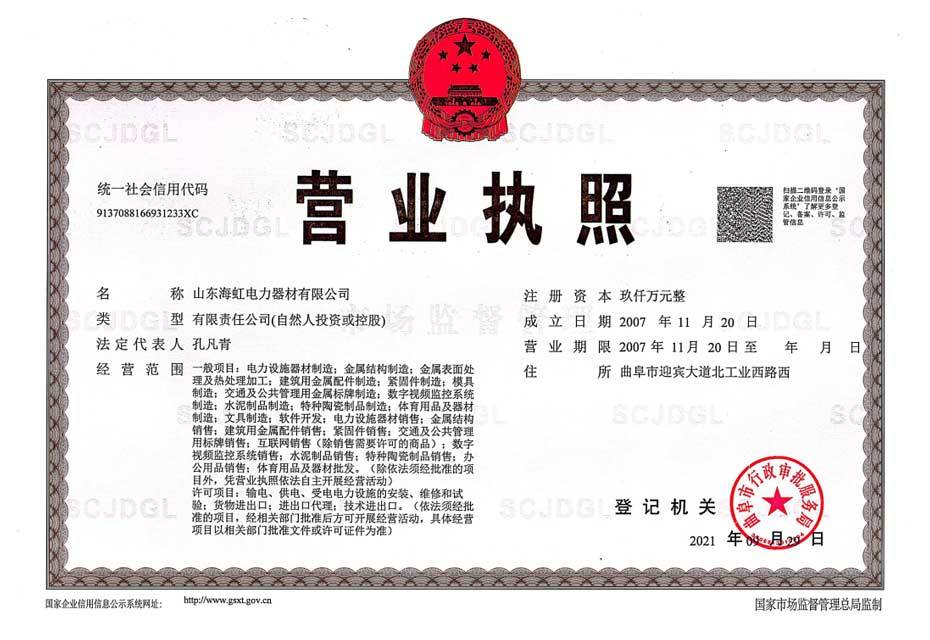
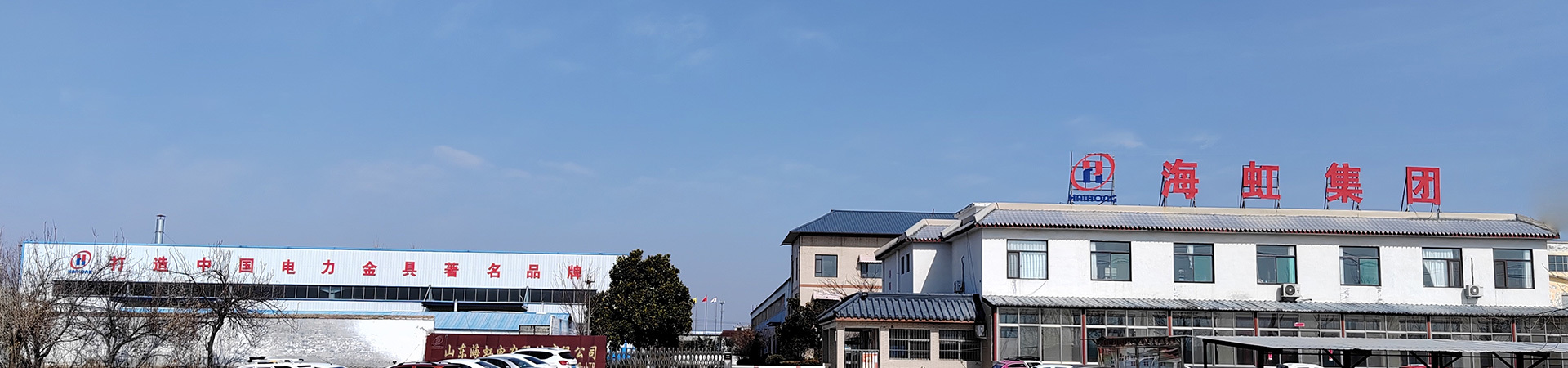
About UsShandong Haihong Electric Power Equipment Co., Ltd. is a new scientific and technological enterprise integrating scientific research, design, development, production and sales. The company is located in Qufu, a famous cultural city in the country of civilization and the hometown of etiquette. It is adjacent to the Beijing-Shanghai high-speed railway in the east, Yanzhou Railway Station in the west, and Ridong Expressway in the south. It has a superior geographical location and convenient transportation. The company was established in 2007. The company has employees with a bachelor's degree or above, accounting for more than 60%, and a talent team with senior technical titles accounts for 30%, specializing in the research and development and manufacturing of power hardware products.
-
ProductsThe main business scope of the company's products: power line fittings, environmental protection and energy saving equipment, monitoring equipment for intelligent power grid, optical cable fittings and iron accessories. The specific products include: tension clamp, suspension clamp, equipment fittings, connection fittings, connection fittings, protective fittings, pre-twisted fittings, insulated fittings, various specifications and types of line iron accessories, bird prevention equipment and other line equipment.
-
News dynamicsProducts by the national electronic control distribution equipment quality supervision and testing qualified, in line with national industry standards, product quality at home and abroad enjoy a high reputation. Since 2015, the company has obtained many bid-winning notices from Sichuan Province and Gansu Province of the State Grid, and obtained a certificate of gold fittings in October 2016.
Price increase! New high!
Release time:
2021-09-14 07:59
For the global aluminum industry, the supply side is full of all kinds of bad news.On the one hand, aluminum metal factories in major economies are currently facing the demand for energy conservation and emission reduction to adjust production. At the same time, the mutiny in Guinea, the world's largest bauxite reserves and second largest production, has also caused the market to worry about the supply of upstream raw materials. In addition, refinery costs in the EU region are rising due to historically high carbon credits and energy prices.
01
Aluminum prices hit a 10-year high, why?
Small to beverage cans, large to aircraft, construction, aluminum is widely used in various fields of life and production. Prior to the outbreak, the global aluminum market was in the midst of an oversupply, with aluminum prices entering a downward trend since peaking in 2018.

But the sudden outbreak disrupted the supply and demand situation in the market, on the one hand, demand with the economic unsealing concentrated release, on the other hand, the global supply chain disruption exacerbated the shortage situation in some areas, thus further pushing up prices.
As the global aluminum demand center shifts from Europe and the United States to Asia, the London Metal Exchange has moved aluminum stocks from Rotterdam in the Netherlands and other places to Malaysian warehouses to get closer to the Asian market. However, since the beginning of this year, the global logistics supply chain has been affected by factors such as port congestion and container shortages, and it is difficult for aluminum stocks far away in Asia to reach Western markets such as Europe and the United States.
According to the Wall Street Journal, ports such as Los Angeles and Long Beach in the United States are crowded with large orders from various companies, which are busy replenishing inventory and preparing for the holiday shopping frenzy. Containers used to transport industrial metals are in short supply and traders are passing on soaring freight costs to customers.

In addition to the cost of aluminum, buyers also have to pay additional costs for shipping, customs and other fees.According to Intercontinental Exchange (Intercontinental Exchange), buyers in the Midwest recently paid extra costs$761 per ton, the highest level since 2012.
In addition, in order to ease the pressure on domestic prices, Russia began to impose tariffs on the export of aluminum and other metals in August. From August 1 to December 31, aluminum produced in Russia will be subject to a 15% export tariff, with an increase of US $254 per ton of aluminum.
According to reports, Russia is the world's second largest producer of primary aluminum (6%) and the world's largest exporter of aluminum ingots (17%). The imposition of aluminum export tariffs has a greater impact on the global primary aluminum supply pattern, further pushing up The cost of the demand side.
According to Yao Wenyu, strategist at ING Groep, a large amount of aluminum is still locked in financing agreements reached by investors, banks and trading companies last year, further limiting the available supply. These transactions include buying aluminum, storing it, and selling metal forward contracts.
02
Military coup in Guinea, triggering global aluminum price turmoil

Guinea ranks second in bauxite supply and first in the world in proven bauxite reserves
(Bloomberg data 2020)
In the early morning of September 6, the news of a "coup in Guinea and the detention of the president" added "waves" to the aluminum market, which had been disturbed by the supply side, thus triggering panic and price increases in global alumina supply.
Guinea is an important bauxite producing area in the world and an important source of bauxite import in China. Customs data show that China will import 111.537 million tons of bauxite in 2020, an increase of nearly 11 percent over the same period last year, of which about 52.6701 million tons are imported from Guinea, accounting for 47.2 percent of the total imports, an increase of 18.51 percent over the same period last year.

"In 2020-2021, although the overall impact of the new crown epidemic on domestic and foreign bauxite production is relatively limited, domestic enterprises have increased their large-scale buying and hoarding of overseas bauxite due to supply chain disturbance concerns," the source said.
The main source countries of China's bauxite imports are Guinea, Australia and Indonesia, which account for more than 90% of China's bauxite imports. Africa Guinea, as China's largest source country of bauxite imports, accounts for half of China's total bauxite imports. If the local political instability affects any link of local production, transportation and export, it may cause global bauxite supply worries, thus directly affecting short-term international bauxite prices, and push up the cost of raw materials in aluminum city."
On September 7, Alpha Conde, the new president of the Guinean military government, declared that "the military government is well aware of the importance of the mining industry to the country's development. In particular, it will remain open to overseas investment and will respect all obligations related to the mining agreement."
Although Guinean officials have said that the supply of bauxite will not be affected, the soaring aluminum prices are still hot. Last Friday, Lun Aluminum rose above 2900 US dollars per ton to close at 2927.5 US dollars per ton, a 13-year high. That night, Shanghai Aluminum's main 2110 contract followed Lunaluminum higher, rising to 23295 yuan/ton in intraday trading, and closing at 23240 yuan/ton as of Friday night.
03
Restrictive Factors of Domestic Aluminum Industry
From the perspective of domestic supply, the expansion of electrolytic aluminum production capacity is constrained, mainly in the two aspects of "power shortage" and "carbon cutting.On the one hand, many provinces and urban areas of power rationing measures led to electrolytic aluminum enterprises power shortage can not be full capacity production; on the other hand, in 2021, carbon neutral, carbon peak officially landed, energy consumption double control to some aluminum smelting industry affected, electrolytic aluminum production costs rise, promote electrolytic aluminum prices continue to rise.
In the context of limited supply, the demand for aluminum continues to increase, especially the use of new energy has become a new growth point for aluminum consumption. It is understood that my country's automobile industry has gradually shifted its focus to lightweight. According to the consumption of bicycles, in 2018, the new energy bus industry will consume a large amount of aluminum. It is estimated that the aluminum consumption of passenger cars will be 210kg, and the aluminum consumption of hybrid buses will be 179.6kg. The aluminum consumption of BEV buses and ICE buses are 128.4kg and 118.7kg respectively. However, compared with the United States, Japan and other developed countries, there is still a big gap in the amount of aluminum used in Chinese cars.
However, according to statistics, the aluminum consumption of new energy vehicles in China is increasing year by year. From January to July 2021, the production and sales of new energy vehicles in China reached 1.504 million and 1.478 million respectively, exceeding the annual production and sales of 1.366 million and 1.367 million vehicles in 2020, reaching a record high. Therefore, there is still much room for growth in the demand for aluminum for new energy vehicles in the future.

04
Conclusion
As far as the current situation is concerned, the supply and price stability of bulk commodities is still the main policy direction at present.On September 1, the State Grain and Material Reserve Bureau put a total of 70000 tons of aluminum in the third batch of national reserves. Up to now, the State Reserve Bureau has put a total of 210000 tons of aluminum ingots on the market.
The National Development and Reform Commission stated that in the near future, the National Grain and Material Reserve Bureau will continue to carry out follow-up delivery work based on market supply and demand and price trends. Institutional analysis believes that the state reserve three times to dump storage, although the number is still lower than the domestic supply side of the reduction, but still partially make up for Inner Mongolia, Henan, Guangxi and other regions due to limited power production caused by the reduction, and may slow down the follow-up domestic aluminum ingot de-stocking speed.
(Source: aluminum mesh)
Next Page
Next Page
Related News
2024/05/31 16:36
See how Haihong's National Day is spent.
2019/10/06 01:16
Congratulations on the establishment of Shandong Haihong Power Group
2020/04/24 15:51
Shandong Haihong Safety Training
2020/12/31 16:36
CONTACT US
Tel : +8615715379122
Fax : +86-537-5052257
Sales Department : +86-15715379122( Mary )
Add : West Industrial Road, Yingbin Avenue, Qufu City, Shandong Province (North West Road, Confucius Avenue)
WeChat Contact
Copyright 2023: Shandong Haihong Electric Power Equipment Co., Ltd. Website Construction:China Enterprise Power Jinan two points SEO Business License